
Vehicles / Starlight
Starlight.
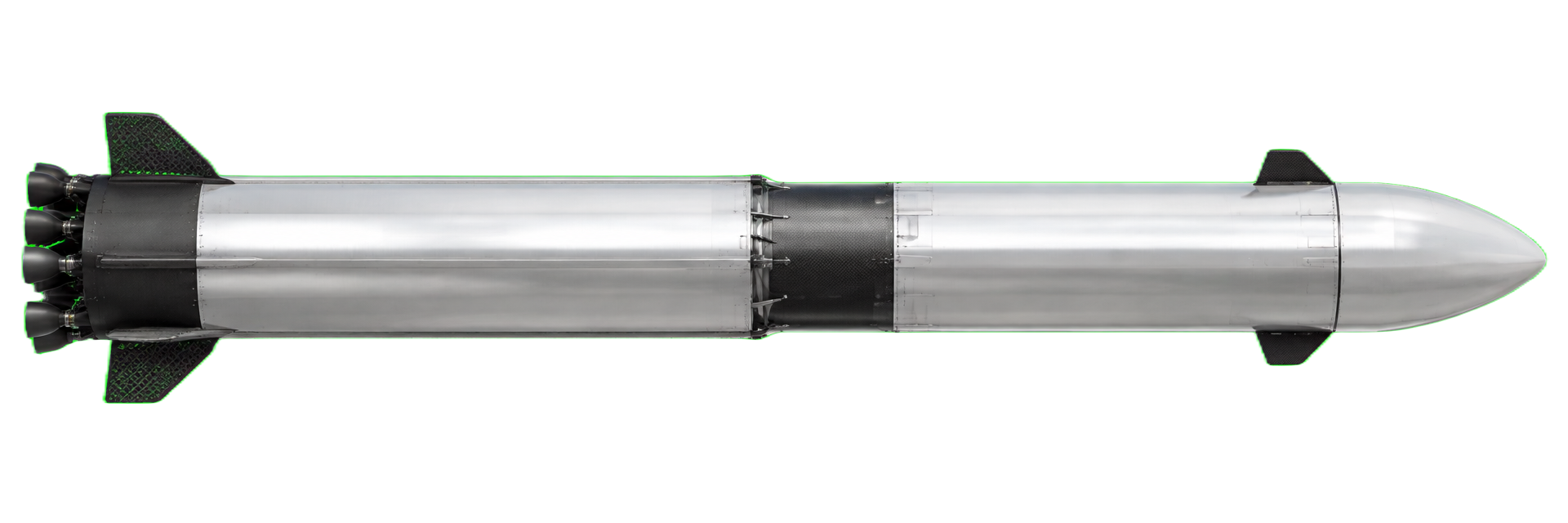
A proposed two-stage launch vehicle architecture for low Earth orbit, designed around full recovery and rapid re-flight.
01 / Design objective
Two stages. Both designed to come home.
The Starlight program evaluates every seal, actuator, and line of flight software around a single design objective: fly again. Recovery, inspection, and re-flight are requirements from the beginning — not additions after the vehicle works.
02 / Reference architecture
One vehicle, designed as a system.
The proposed architecture uses propulsive vertical landing for both stages. The intended cycle is direct: land, inspect, service, load, and fly. Pulsar avionics connects guidance, vehicle health, and ground testing in one development stack.
02
Recoverable stages
VTVL
Landing mode
LEO
Primary regime
03 / Vehicle specification
Design targets.
Targets for the initial operational configuration. These are design goals, not flown results.
Class
Two-stage, fully reusable
Regime
Low Earth orbit
Payload to LEO (target)
1,500 kg
Reuse target
100% of dry mass
Turnaround target
48 hours
Propellants
LOX / Methane
Landing mode
Propulsive VTVL, both stages
Avionics
Pulsar flight computer
04 / Propulsion direction
Methane, deep throttle, and recovery.
The propulsion study is focused on clean-burning propellants, repeatable starts, and the throttle control required for propulsive landing. Performance claims will follow component and integrated testing.
LOX / CH₄
Propellant direction
Deep
Throttle target
20 : 1
Throttle ratio target