
Technology
The nervous system and the intelligence.
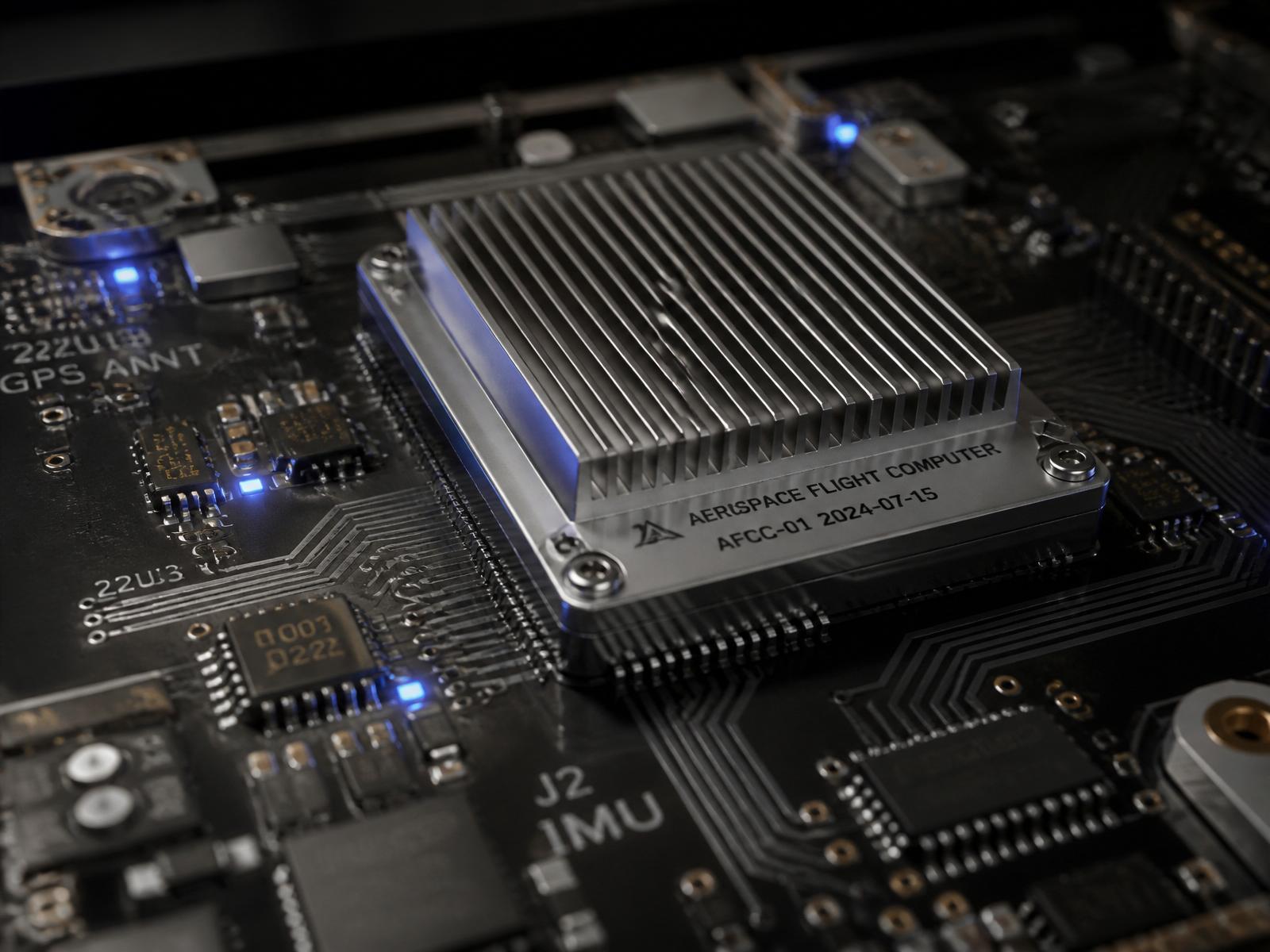
Pulsar is being developed as the flight-computing foundation for Astroncia vehicles. Arete is the organization's open platform for structured, reproducible research.
Program 02
Pulsar
Flight Computer
A flight-computer and real-time software program designed for radiation tolerance and deterministic operation. Pulsar is intended to become the shared computing foundation for Astroncia vehicles.
Traditional avionics ship as bespoke boxes with vendor-specific tooling. Pulsar is designed as a platform: one board family, one OS, one deterministic bus. Every The aim is for Astroncia vehicles to share one core stack, tested against the same simulator and debugged with the same tools.
Class
Flight computer, avionics stack
Processor
Multi-core, redundant lockstep
Radiation goal
Designed for SEE hardening and TID tolerance
Bus
TSN Ethernet + CAN-FD
Real-time OS
Preemptive, deterministic, in-house
Certification target
DO-178C spirit, ECSS aligned

Program 03
Arete
Open-Source AI Research Platform
Arete is Astroncia's open-source AI research platform, free for researchers everywhere. It gives labs, students, and independent scientists the same training, evaluation, and deployment pipeline we use in-house — so the next breakthrough in autonomous flight can come from anywhere, not just from us.
Explore AretePlatform capabilities
Arete, at a glance.
Class
Open-source AI research platform
License
Permissive open source — free for researchers, labs, and students
Focus areas
Guidance, vision, autonomy, anomaly detection
Stack
Training, evaluation, and deployment pipeline — reproducible end to end
Compute direction
Architected for commodity GPUs, HPC clusters, and edge inference
Data
Public telemetry, imagery, simulation, and hardware-in-the-loop datasets
Community
Open contributions, shared benchmarks, and reproducible workflows