



Now Reading: Light Pollution and the Fading Night Sky
-
01
Light Pollution and the Fading Night Sky







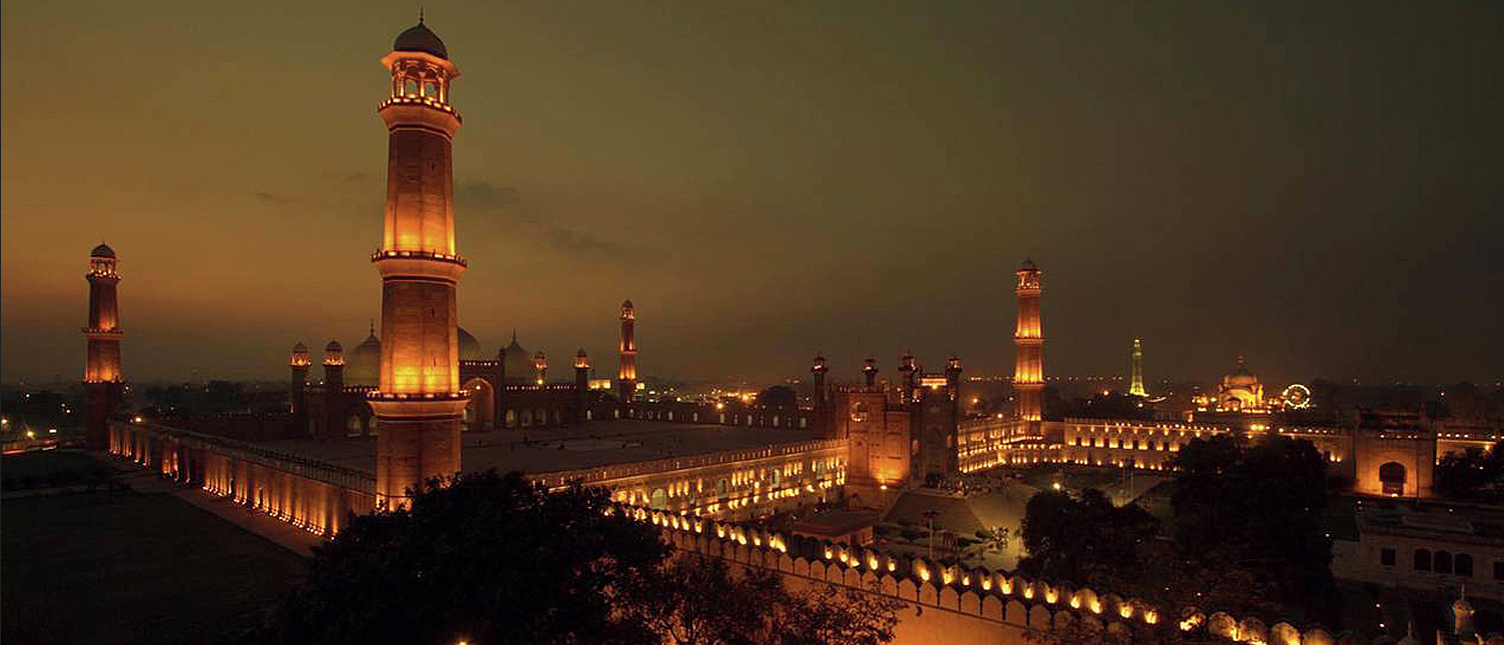
Why Pakistan’s urban glow is hiding our stars and what we can do about it?
On a moonless night in rural Pakistan, the sky once offered a breathtaking panorama of stars. You could trace the Milky Way as a river of light across the heavens and feel, even for a moment, the vastness of the cosmos. It was a view that inspired wounder and reminded us how small we are beneath the universe.
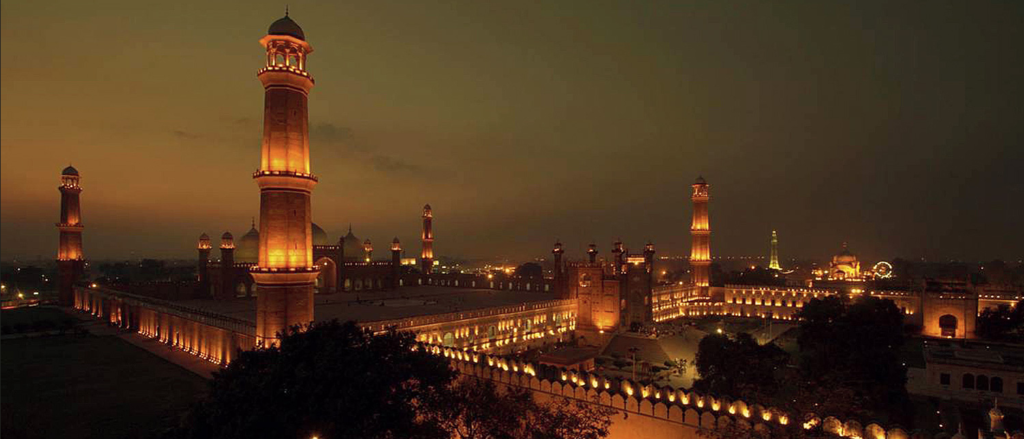
Today, that celestial experience is slipping away. Even far from city centers, the horizon glows faintly with the reach of urban light. Floodlights blaze through the night, streetlamps beam upward, and decorative LEDs wash the stars from sight. The stars have not disappeared our ability to see them has. This is the quiet crisis of light pollution, and its consequences stretch far beyond lost stargazing moments. It touches our science, our culture, our ecology, and our collective sense of wonder.
What is light pollution and how bad is it?
Light pollution happens when artificial light becomes excessive, poorly aimed, or simply not managed well. We see it as the familiar orange glow hanging over cities or the sharp glare from overly bright streetlights. Astronomers quantify this glow using the Bortle scale, which ranges from Class 1 perfect, untouched darkness, to Class 9, the washed-out brightness of a city center.
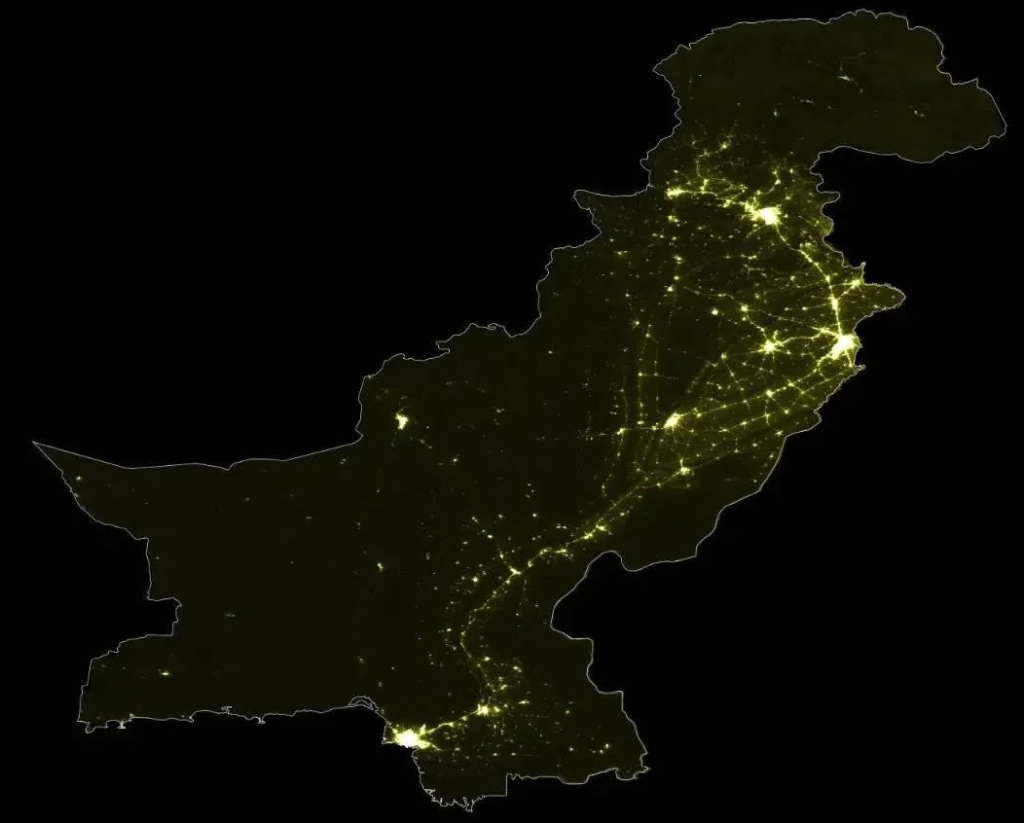
In Pakistan’s major cities, the impact is becoming impossible to ignore. Satellite data from Lahore shows that nighttime brightness rose by nearly 23 percent between 2012 and 2019, with about 54 percent of the city exposed to noticeable light pollution during that time. Similar trends show up across other rapidly expanding urban areas. And this isn’t just a local issue. The New World Atlas of Artificial Night Sky Brightness reports that more than 80 percent of people worldwide now live beneath skies dulled by artificial light.
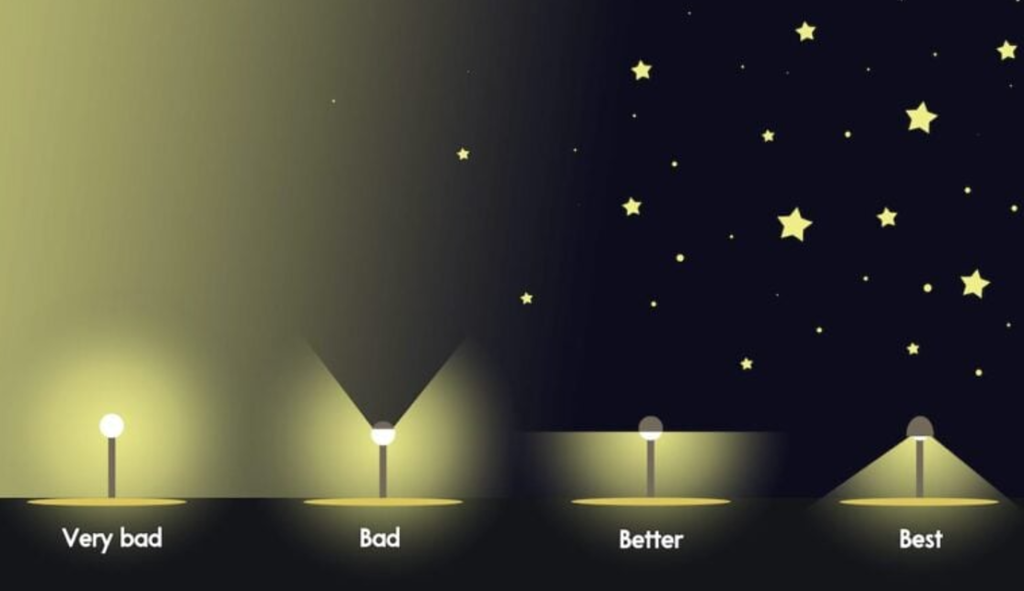
Organizations such as DarkSky International recommend that lighting should be useful, targeted, low-level, controlled, and warm in color. These are not aesthetic preferences but practical principles for how we can illuminate our surroundings more intelligently.
Why it matters?
Astronomy and science: As the sky brightens, faint celestial objects become harder to observe. Amateur and professional astronomers alike depend on dark skies for discovery.
Culture and heritage: The stars have guided our poetry, navigation, and imagination for millennia. When they fade, we lose part of that shared cultural inheritance.
Ecology and environment: Artificial light disrupts the behaviour of birds, insects, and plants. Migratory species lose their bearings; pollinators alter their cycles; ecosystems feel the ripple.
Energy and economy: Light spilling into the sky is pure waste. In a power-hungry nation like Pakistan, skyglow is a visible symptom of energy inefficiency.
Urban glow versus rural skies
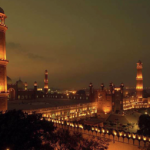
Stand on a rooftop in Karachi, Lahore, or Islamabad on a clear night: the sky glows pale grey orange, with only a few bright stars cutting through.

Travel a few hours outward to the deserts of Thar, the mountains of Gilgit-Baltistan, or the high plateaus of Balochistan and the heavens return in full splendour. The Milky Way stretches across the sky that reminder of what once was everywhere.
That contrast is widening. Urban development and unchecked lighting are pushing brightness ever outward. Recent national mapping by Ahmad et al. (2024) highlights Punjab, Sindh, and central Khyber Pakhtunkhwa as Pakistan’s most affected regions, with urban centers spreading light domes into nearby rural districts.
What can be done: Practical steps
Use fully shielded fixtures: Direct light downward, not sideways or upward. This reduces glare and saves energy.
Choose warm-coloured LEDs: Cool white lights scatter more in the atmosphere. Lights below 3000 K are better for outdoor use.
Adopt lighting controls: Motion sensors, dimmers, and timers ensure lights are used only when needed.
Designate dark-sky reserves: Protect rural and mountain areas for astronomy, eco-tourism, and wildlife.
Promote community awareness: Encourage schools, universities, and citizen groups to hold stargazing events or measure sky brightness.
Develop smarter municipal policies: Local governments can include lighting standards in city planning to save energy and preserve heritage.
Local initiatives such as Dark Sky Pakistan already promote shielded fixtures, warm-colour LEDs, and smart lighting controls models that can guide other municipalities.
Looking up again
In the mountains of Skardu or the deserts of Thar, the grandeur of the cosmos still reaches us. But without action, these may become our last sanctuaries of true darkness.

Pakistan, with its varied geography, can still protect corridors of night where the stars remain visible to future generations. The night sky is not merely a backdrop for astrophotography; it is part of our natural and cultural heritage. Every unnecessary bulb that points upward is a small act of erasure. So, the next time you step outside on a clear night, look up. Count the stars. Ask yourself if the Milky Way is visible. If not, that’s light pollution at work and something we can all help change.
Let’s fight for our night sky, not for old memories, but for science, for culture, and for the wonder it gives us.
Authors











Related Posts



Stay Informed With the Latest & Most Important News

Previous Post
Next Post









Stay Informed With the Latest & Most Important News
Advertisement